Skip to content
Lamicare is a cosmetic product, not a medicine. It does not treat or prevent medical conditions.
background-terbinafine

Terbinafine

If you are dealing with a fungal skin or nail infection, you may have come across the name terbinafine. Whether you have seen it listed on a packet or had it recommended by a healthcare professional, understanding what this active ingredient is – and how it works – is key to choosing the right treatment.

In short, terbinafine is a broad-spectrum antifungal medicine widely used to treat common fungal skin infections like athlete’s foot, jock itch, and ringworm. It is also the key active ingredient in the Lamisil product range.

This guide covers what terbinafine is, how it fights fungi at the cellular level, the differences between topical and oral forms, and what to expect during treatment.


02 October 2026

By Mediha Sarwar

ABPI qualified GPhC registered pharmacist

Medical Advisor, Karo Healthcare

What is terbinafine?

Terbinafine is a highly effective antifungal agent belonging to a class of medicines known as allylamines. It works by targeting and killing the fungi that cause the infection, helping to clear the infection at its source.

Terbinafine is particularly effective against dermatophytes, the fungi that cause most superficial fungal infections of the skin, hair and nails. It is commonly used to treat:

  • Athlete’s foot (tinea pedis)
  • Jock itch (tinea cruris)
  • Ringworm (tinea corporis)
  • Fungal nail infections (onychomycosis)

Is Terbinafine the Same as Lamisil?

A common question is whether terbinafine and Lamisil are the same. Terbinafine is the active ingredient, while Lamisil is a brand name for products containing terbinafine. In other words, Lamisil contains terbinafine as its active antifungal component.

How does terbinafine work?

To understand how terbinafine works, it helps to look at how fungal cells survive. Fungi rely on a vital component called ergosterol to build and maintain their cell membranes. Without sufficient ergosterol, normal fungal cell function is impaired.

Terbinafine exerts its antifungal effect through a well-characterised mechanism of action:

  • Inhibition of Ergosterol Synthesis: Terbinafine inhibits squalene epoxidase, a key enzyme in the fungal ergosterol biosynthesis pathway.
  • Accumulation of Toxic Squalene: Inhibition of this enzyme leads to depletion of ergosterol and accumulation of squalene within fungal cells. High intracellular concentrations of squalene are toxic to fungi and contribute to fungal cell death.

Unlike some antifungal agents that primarily inhibit fungal growth (fungistatic activity), terbinafine is generally fungicidal against dermatophytes, meaning it kills susceptible fungal cells. This activity helps eradicate the fungi responsible for the infection.

Topical vs oral terbinafine – what’s the difference?

Terbinafine is available as both topical formulations (such as creams, gels and sprays) and oral tablets. The most appropriate formulation depends on the type, location and severity of the fungal infection.

FeatureTopical Terbinafine (Creams, Sprays, Gel)Oral Terbinafine (Tablets)
AvailabilityOver-the-Counter (OTC)Prescription Only (via GP or specialist)
Primary UsesMild to moderate skin infections (e.g., athlete’s foot, jock itch, ringworm)Severe, widespread skin infections or deep fungal nail infections
How It WorksApplied directly to the affected area, resulting in low systemic exposureAbsorbed systemically and distributed to skin, hair and nails or can write to the site of infection
SuitabilityAppropriate for Localized infectionsRequires assessment and prescribing by a healthcare professional

Topical terbinafine is available over the counter in the UK, making it an accessible first-line choice for common localized fungal skin conditions.

What does terbinafine treat?

Terbinafine is an antifungal medicine commonly used to treat several fungal infections, including:

  • Athlete’s Foot: A fungal infection affecting the feet, often causing itching, scaling, peeling and redness, particularly between the toes.
  • Jock Itch: A fungal infection affecting the groin area, typically presenting as an itchy, well-defined red rash.
  • Ringworm: A fungal infection of the skin that commonly appears as circular, scaly patches with a raised border. The infection can appear on various parts of the body such as the scalp, arms, torso and so on.
  • Fungal Nail Infections: Infection of the nail unit that may cause thickening, yellowing, and crumbling. (Depending on the extent and location of the infection, treatment may involve topical or oral antifungal therapy).

How long does terbinafine take to work?

The time it takes for terbinafine treatment to show results depends on the type and location of the fungal infection, as well as the formulation used:

  • Symptoms such as itching and discomfort may begin to improve within a few days of starting treatment, although the time to improvement can vary between individuals. Standard topical creams and sprays are typically applied once or twice daily for 1 to 2 weeks. Some film-forming formulations are designed to retain terbinafine on the skin surface, allowing continued penetration into the outer layers of the skin after application.
  • Fungal Nail Infections: Improvement in the appearance of the nail takes longer because nails grow slowly. Although terbinafine starts acting against the fungal infection after treatment is initiated, visible improvement depends on the gradual replacement of the affected nail by healthy nail growth. Fingernails may take approximately 3-6 months to grow out, while toenails may take 9-12 months or longer.

Terbinafine side effects

Topical terbinafine is generally well tolerated because systemic absorption is low. However, like all medicines, it can occasionally cause mild local reactions.

Potential Topical Side Effects

Possible application-site reactions may include:

  • Mild skin redness or irritation
  • A slight stinging or burning sensation upon application
  • Localized dryness or peeling skin

These reactions are generally mild and resolve after treatment is stopped or completed. If you experience severe allergic reactions—such as swelling, widespread rash, or hives—discontinue use and seek immediate medical advice.

(Note: Oral terbinafine tablets have a different safety profile and may be associated with adverse effects such as gastrointestinal symptoms, taste disturbances and, rarely, liver-related adverse events. Healthcare professionals will discuss the risks and appropriate monitoring considerations before prescribing oral treatment.).

Terbinafine vs other antifungals (e.g. clotrimazole)

When choosing an over-the-counter treatment, you may notice other active antifungal ingredients on pharmacy shelves, such as clotrimazole or miconazole.

  • Mechanism of Action: Terbinafine is primarily fungicidal against dermatophytes, meaning it kills the fungal cells. In contrast, azole antifungals like clotrimazole are primarily fungistatic, meaning they stop fungi from multiplying rather than killing them directly, although activity may vary depending on the organism and conditions.
  • Treatment Duration: Recommended treatment durations differ between products and indications. For some dermatophyte infections, topical terbinafine treatment courses may be shorter (often 1-2 weeks) than those recommended for topical clotrimazole (typically requires 3-4 weeks). Different antifungal agents may be preferred for different fungal infections. The most appropriate treatment depends on the suspected organism, infection site and product indications.

Buying terbinafine with Lamisil – what are your options?

When purchasing over-the-counter terbinafine for skin infections, selecting the right product format depends on your preferences and the site of infection:

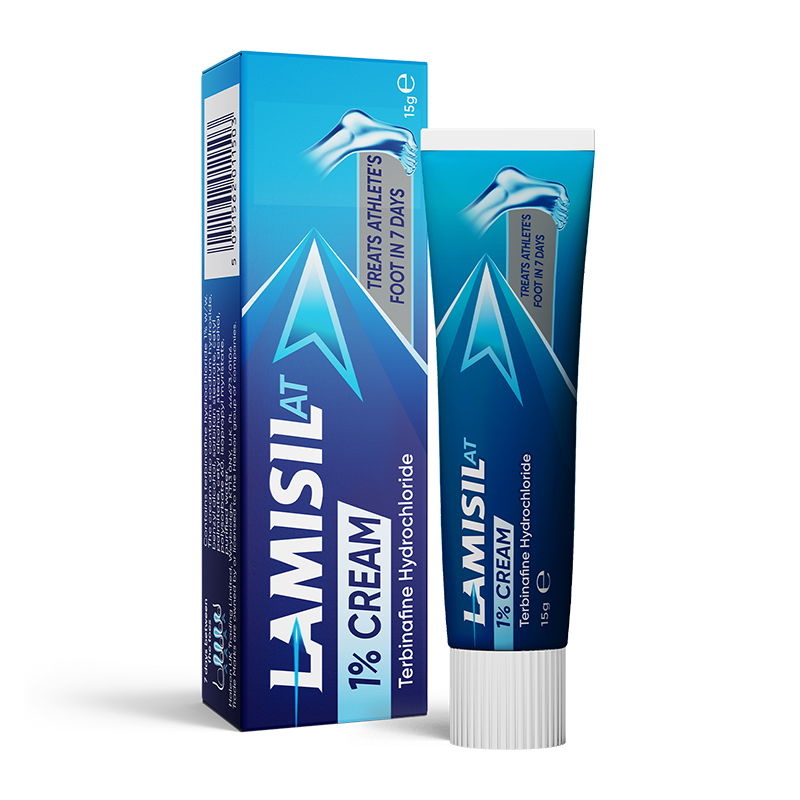
  • Terbinafine Cream: Ideal for dry, peeling, or cracking skin (e.g., Lamisil AT 1% Cream).
  • Terbinafine Spray: A convenient, touch-free option ideal for covering larger areas or reaching difficult spots without needing to apply the product in by hand (e.g., Lamisil AT 1% Spray).
  • Single-Dose Solution: A film-forming terbinafine solution (e.g., Lamisil Once) is designed to leave a terbinafine-containing film on the skin after a single application and is indicated for the treatment of athlete’s foot (e.g., Lamisil Once).

For the treatment of mild to moderate fungal skin infections, topical terbinafine is commonly used as a local antifungal therapy that acts directly at the site of infection.